
Santorini
May 1, 2027CulinarySantorini
The Santorini Table
Four days of eating on a volcano, with the people who grow it.
4 days / 3 nightsMay 1, 2027
From $1,380pp
8 datesJournal · September 2, 2026
By Leo Shim
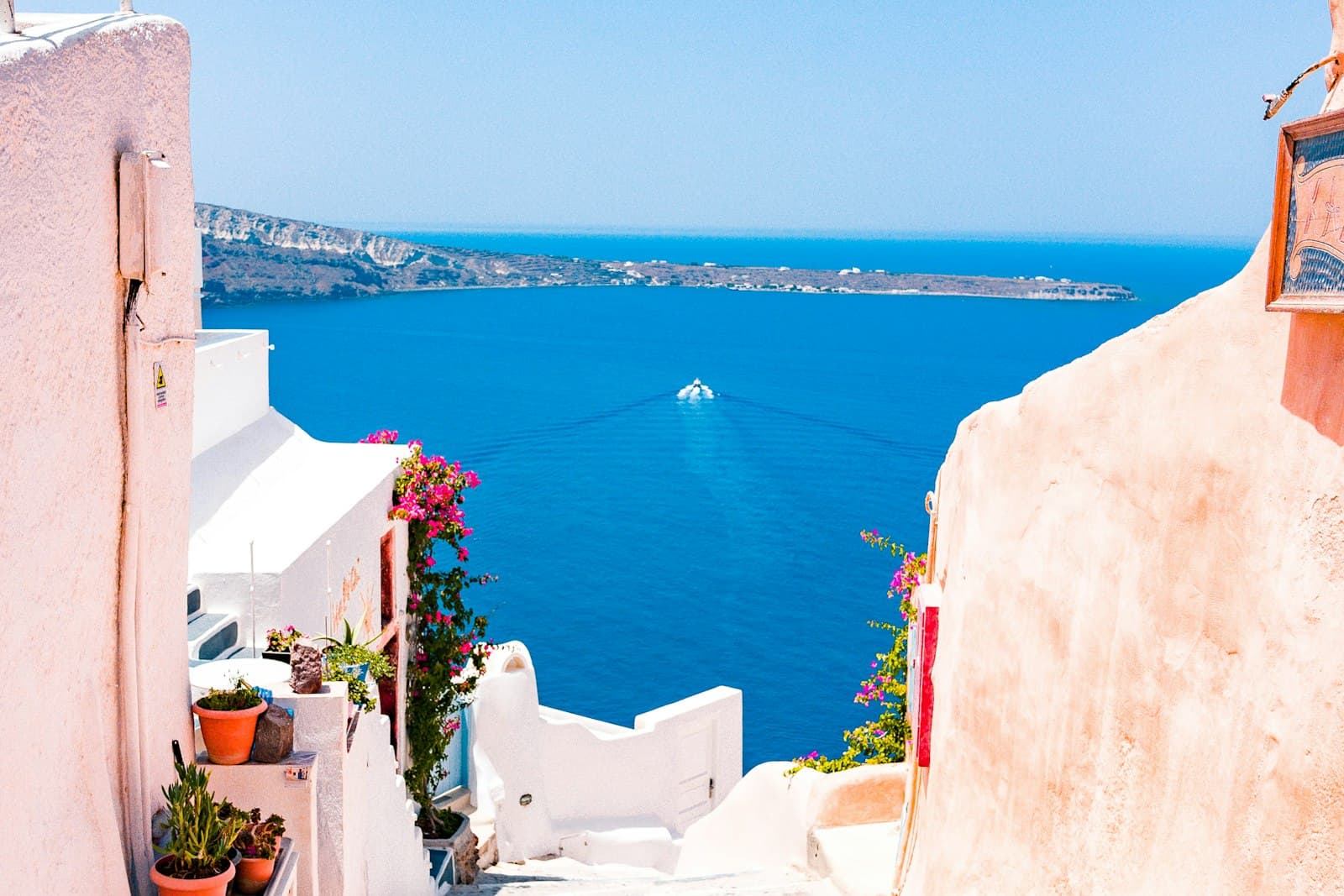
The soil on Santorini is pumice and ash. It holds almost no water, the wind never stops, and there is not a single river on the island. Nothing should grow here. What does grow here is some of the most intense produce in the Mediterranean, and that is the whole idea behind our four-day table.
The Santorini cherry tomato is small, thick-skinned, and tastes like a tomato that has been concentrating. It is grown without irrigation — the plants pull moisture from the night fog — and it is the reason domatokeftedes, the fried tomato fritters you will find on every menu, are better here than anywhere else. We make them on the second morning, with Maria, in her courtyard in Megalochori. You will make them badly. They will still be wonderful.
Santorini vines are trained into a kouloura, a low basket woven from the vine itself, so the grapes grow inside a ring of leaves that shelters them from the wind and catches the fog. Some of these vines are over a hundred years old; phylloxera never reached the island's volcanic soil. The wine is Assyrtiko, bone dry, mineral, and the best thing to drink with anything that came out of the sea.
Not the bean you are thinking of. Santorini fava is a yellow split pea, cooked to a purée and finished with olive oil, capers and raw onion. It has been grown here for three and a half thousand years — they found it in the ruins at Akrotiri — and it tastes like it knows.
We eat lunch outside every day. We eat dinner somewhere with a view exactly once, because the view is the point that night and the food is not. The other three nights we eat where the food is the point, which is usually somewhere with no view at all.
The Santorini Table is four days and three nights. Bring an appetite and loose trousers.
The trip this is about
More trips in Santorini.